
 |
 Latest Entry Latest Chapter All Chapters Landmark Entries '97 Trail Journal Search |
 |
 |
 |
 |
|
|
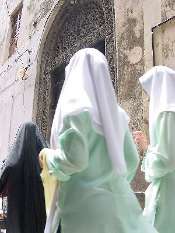
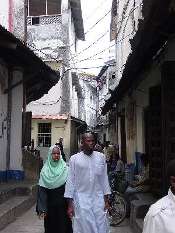
 Exotic Zanzibar We arrived at Dar es Salaam's port to catch a ferry to Zanzibar island. A few hours later we found ourselves going through security at Dar es Salaam International Airport. The eleven minute flight was cheaper than the afternoon ferry. When we bought the tickets, we thought this would be a little charter flight from a small airstrip. Not the case. It was a perfectly proper scheduled South African Airways flight on a big commuter propeller plane. Flight attendant, seatbelt demonstration and all. I even thought briefly she was going to attempt an in-flight beverage service during our eleven minutes in the air. "We might be among the rich and famous." Zanzibar, like the rest of Tanzania that I've seen, is fascinating and utterly distinct from anything we've visited in Southern Africa. It feels old. The only city on the island is called Stone Town and could be mistaken for somewhere in Europe or North Africa, with its narrow alleys, back streets and careening Vespas. On the plane we joked that the island is always prefaced by the word "exotic." Exotic Zanzibar, the tour agencies say. Now we know why. "Bright blue water and blindingly white sand."
Best of all, the place is safe. At least seems to be. Unlike everywhere we've been in Africa, you can walk around even at night without much worry of being mugged. Apparently most of Tanzania is like this. "Thieves and muggers hardly exist," raves Lonely Planet. While we're trying not to be complacent, it's such a relief to not have to concentrate every minute on how not to get robbed. It's now about nine at night and I'll be walking back to the hotel alone down narrow dark alleys... and I'm not worried. What a place. "Lobster is about two dollars."
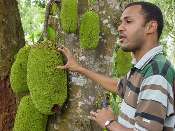
Zanzibar is famous for its spices. "The Spice Island," they call it. So you're pretty much required to do the "Spice Tour" when you come here. And it's not a bad deal. It's about ten dollars and includes lunch and all the raw spices you can choke down. The guide walks you and your sweaty tourmates through grove after grove of every variety of spices. Cumin, vanilla, cloves... they're all here. So interesting to see them in a setting other than a red-and-white McCormick tin. Did you know nutmeg is a seed and not a nut? "It's a government monopoly, sort of." And by the way, I didn't know this but Zanzibar was its own country until the 1960s, I think. It merged with the mainland and became part of the "United Republic of Tanzania" almost fifty years ago, but people here still think of themselves as quite different from the rest of the nation. They even stamp your passport when you come and go from the ferry port... even though you're traveling within the same country. This afternoon we head up the island to the North Coast. The beaches are supposedly spectacular. If they're anything like what we saw from the plane, it'll be perfect. posted at 10:14pm Local Time |
 Previous Entry